

How To Increase Committed Memory Windows 10
On Windows ten, virtual memory (or paging file) is an essential component (hidden file) designed to remove and temporarily store less oftentimes use modified pages allocated in RAM (random-access retentiveness) to the hard drive. Using this approach allows the arrangement to prioritize faster concrete memory for more than frequent processes and applications, improving the overall operation and preventing the device from locking up in the event it runs out of organisation memory.
In addition, the paging file is important to back up crash dumps during a organisation crash (Blueish Screen of Decease), as without a big plenty folio file, a dump with all the contents of the system retention won't be created.
Although the system does a pretty skillful job managing the paging file size according to diverse factors automatically, sometimes, you may still need to increment the default virtual retention values manually. For instance, when you see the "Your arrangement is depression on virtual retentiveness" message. Y'all're noticing slow performance over time, or a item application requires specific parameters to work as intended.
If you lot're experiencing issues with virtual retentiveness, the device doesn't have enough memory, or you're trying to ameliorate the system operation, Windows 10 allows you to increase the size of the virtual retentivity in at least ii ways using the Settings app and Command Prompt.
In this Windows x guide, we'll walk you through the steps to increment the size of the virtual memory to better the system responsiveness.
- How to increment virtual memory using Settings
- How to increase virtual memory using Command Prompt
How to increment virtual memory using Settings
To adapt the virtual retentiveness size on Windows 10, apply these steps:
Warning: Although anyone can alter the paging file size, information technology'due south only recommended to use these instructions if yous take a valid reason, and yous know what you're doing.
- Open up Settings.
- Click on System.
- Click on Almost.
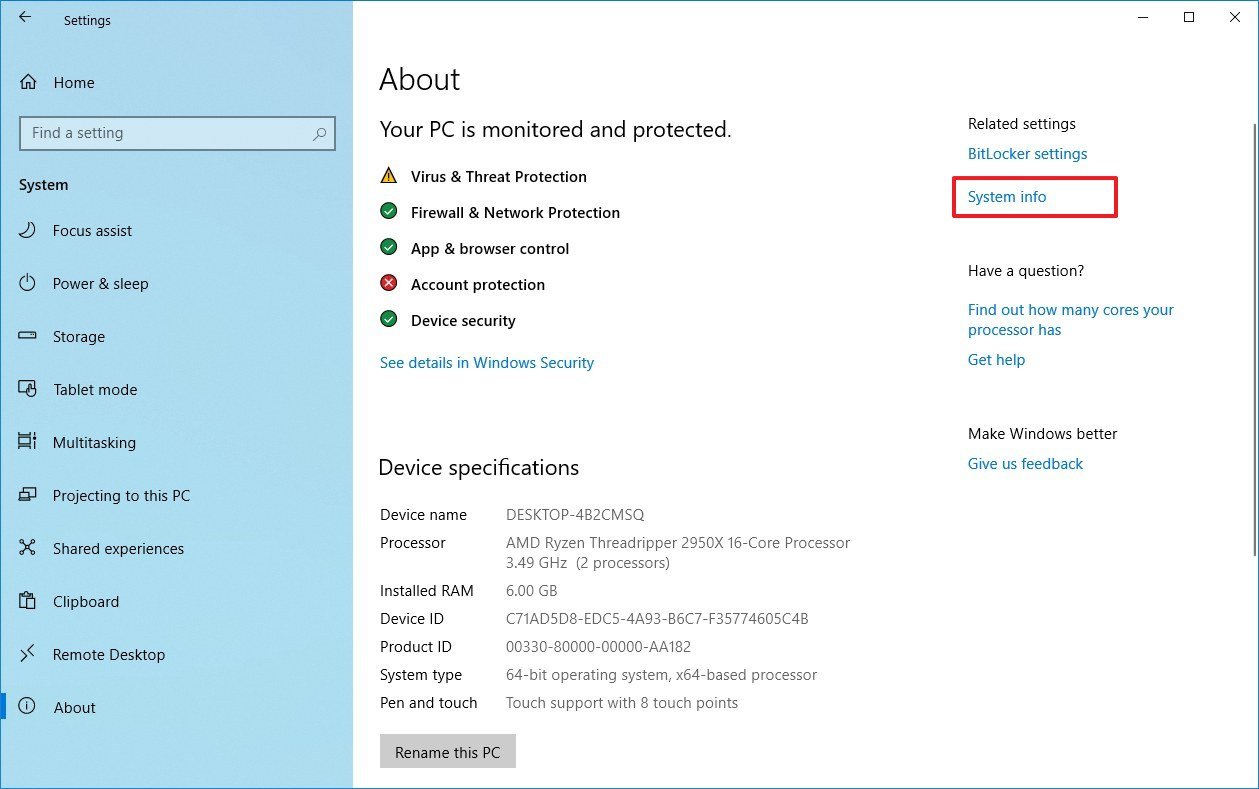
- Nether the "Related settings" section, click the Organization info option.
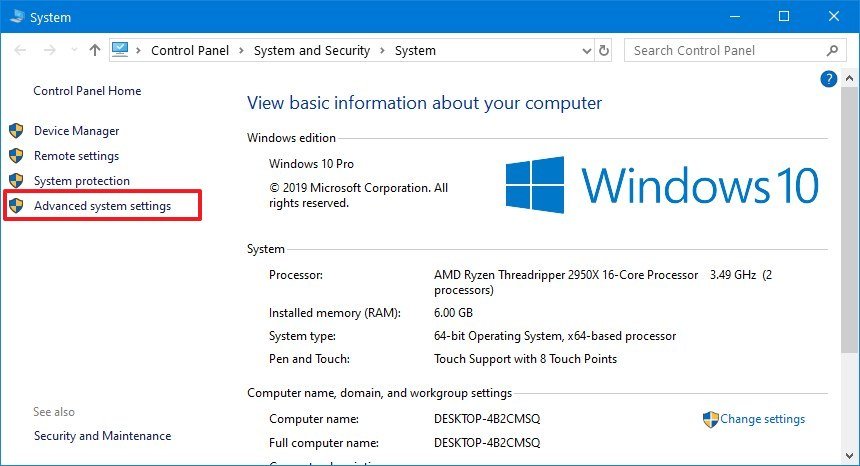
- Click the "Advanced system settings" option from the left pane.
- Click the Advanced tab.
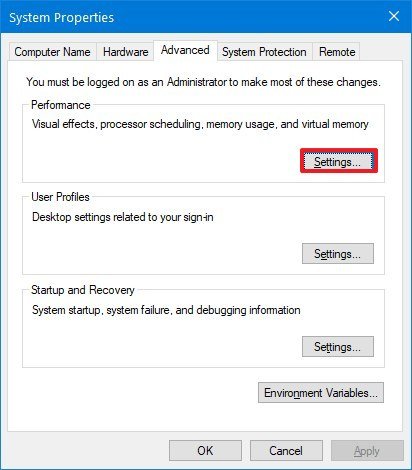
- Under the "Functioning" department, click the Settings button.
- Click the Advanced tab.
- Under the "Virtual memory" section, click the Change button.
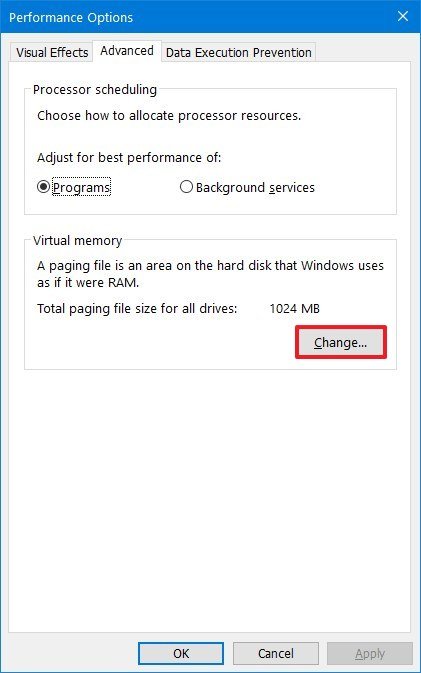
- Clear the Automatically manage paging files size for all drives option.
- Select the Custom size option.
- Specify the initial and maximum size for the paging file in megabytes.Quick tip: The size of the virtual memory is unique to each device, and it can't exist generalized. Withal, usually, it'due south recommended to employ a number that'southward one and a half times the full available memory for the "Initial size" and three times of available retention for the "Maximum size" when possible.
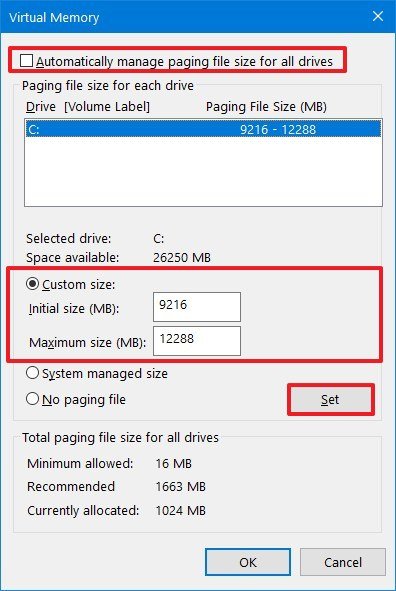
- Click the Set button.
- Click the OK button.
- Click the OK button over again.
- Restart your device.
One time you complete the steps, you should notice an increase in functioning when navigating Windows 10 likewise as when running multiple apps at the same time.
If yous demand to revert the changes, you tin can utilise the same instructions, merely on footstep No. 10, brand certain to check the Automatically manage paging size for all drives option, and restart your device.
How to increase virtual retentiveness using Command Prompt
To modify the paging file size with Command Prompt, use these steps:
- Open Showtime.
- Search for Command Prompt, right-click the top outcome, and select the Run as administrator choice.
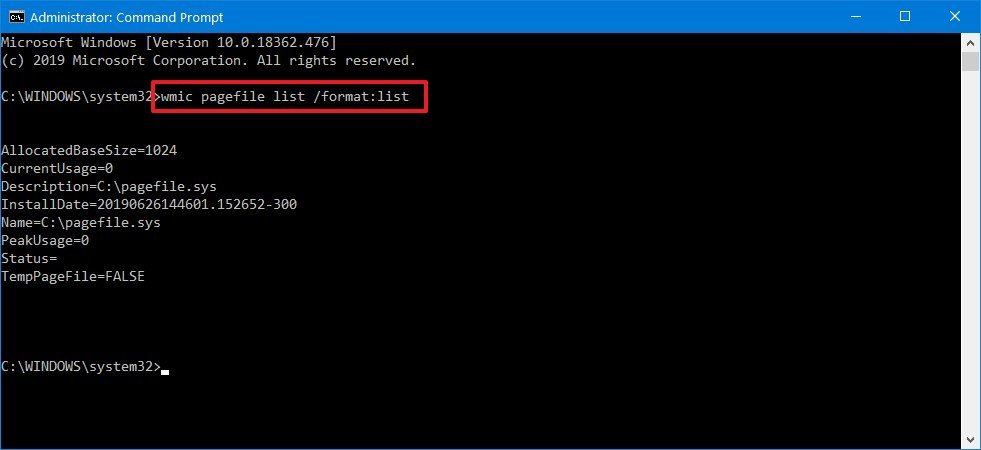
- Type the following command to understand the electric current status of the paging file and printing Enter:
wmic pagefile list /format:listing
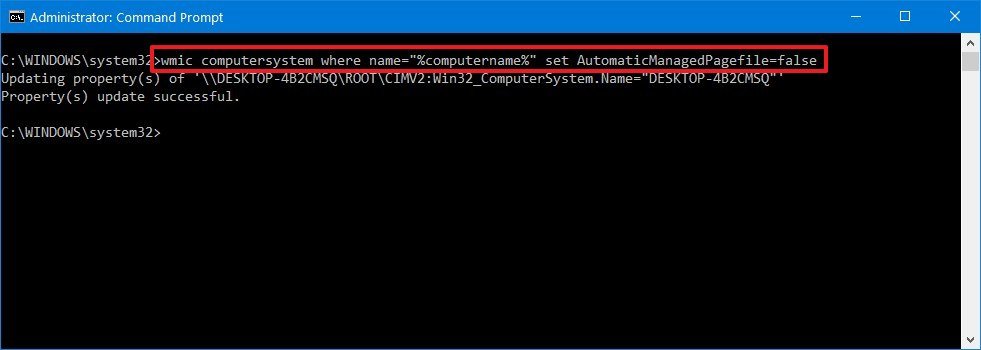
- Type the post-obit command to switch grade manage to custom virtual memory and press Enter:
wmic computersystem where proper name="%computername%" set AutomaticManagedPagefile=false
- Blazon the following command to set the initial and maximum size of the virtual memory and press Enter:
wmic pagefileset where proper noun="C:\\pagefile.sys" ready InitialSize=YOUR-INIT-SIZE,MaximumSize=YOUR-MAX-SIZEThis example sets the paging file to "9216" and "12288" megabytes for the initial and maxium size:wmic pagefileset where proper name="C:\\pagefile.sys" set InitialSize=9216,MaximumSize=12288
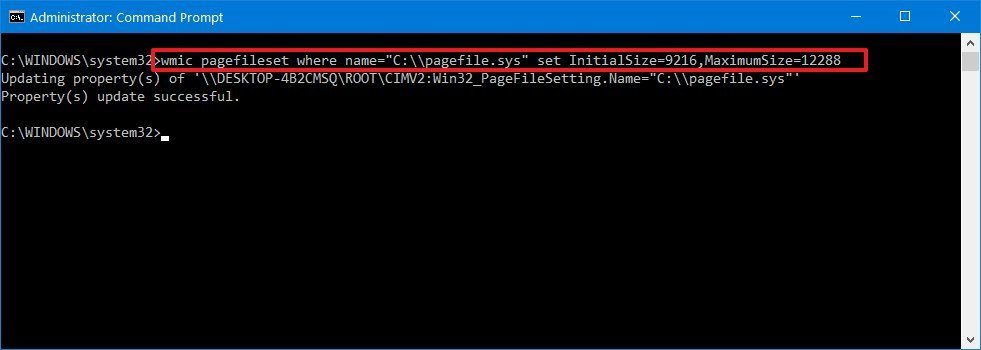
- Type the following command to restart your reckoner and printing Enter:
shutdown -r -t 00
After you complete the steps, the device will start using the new values for virtual memory, which, if washed correctly, should help to better system performance.
If you no longer demand to utilize the custom size for virtual memory, yous tin e'er revert the changes and allow Windows 10 to manage this characteristic using this command:
wmic computersystem where name="%computername%" gear up AutomaticManagedPagefile=true and restarting your device.
While information technology's recommended to employ one and a one-half times the available memory for the initial and 3 times the retentiveness for the maximum size, make sure to test the changes and adjust the values if you're experiencing freezes, crashes, and other bug.
Although it's possible to disable virtual memory on Windows 10, even when you have a big amount of system memory, it's not recommended to disable this characteristic. Usually, if you disable paging file, some applications may stop working, some system features may not work efficiently, and you may stop up with some weird behaviors.
Source: https://www.windowscentral.com/how-change-virtual-memory-size-windows-10
Posted by: johnstonwhiced1949.blogspot.com
0 Response to "How To Increase Committed Memory Windows 10"
Post a Comment